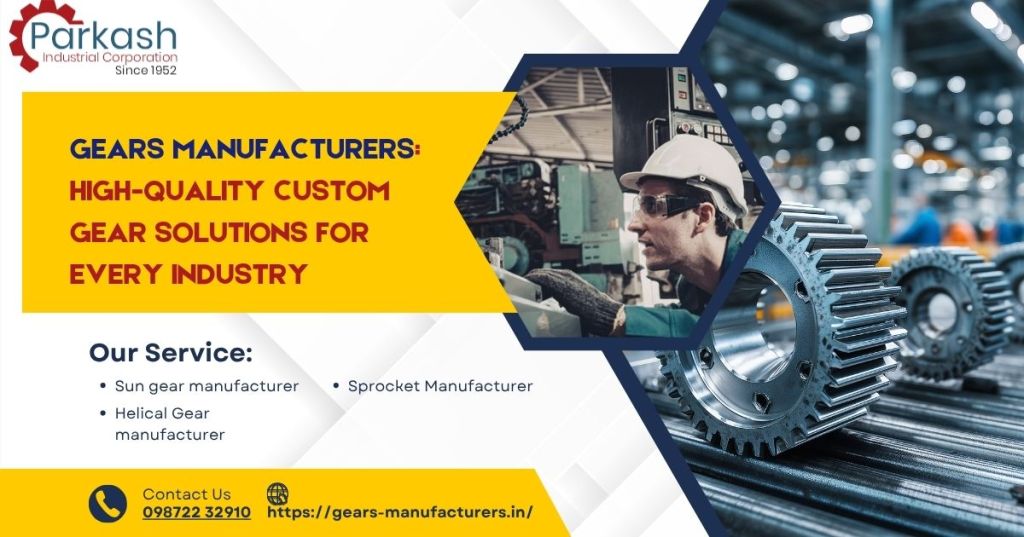
Modern industries depend heavily on precision-engineered components to ensure smooth operations, maximum efficiency, and long-term reliability. Among these essential components, gears play a critical role in transmitting power and controlling motion in machinery, vehicles, and industrial equipment. From automotive systems to heavy industrial machinery, gears are the backbone of mechanical performance. This is why businesses across different sectors constantly search for reliable gears manufacturers that can provide durable, accurate, and customized solutions.
Today, industries demand advanced gear systems capable of handling high loads, minimizing friction, and improving operational efficiency. As technology evolves, manufacturers are focusing on innovation, precision engineering, and quality materials to meet the growing needs of various sectors. Whether it is a small mechanical assembly or large industrial equipment, selecting the right gear manufacturer can significantly impact productivity and machine lifespan.
This article explores the importance of gears, the role of modern manufacturing, various types of gears, industrial applications, and how trusted gears manufacturers deliver high-quality custom solutions for every industry.
Understanding the Importance of Gears in Modern Industries
Gears are mechanical components designed to transmit torque and rotational motion between machine parts. They are widely used in automobiles, industrial machinery, robotics, aerospace equipment, agricultural tools, and power generation systems. Without gears, modern machines would struggle to achieve controlled speed, efficiency, and power transmission.
The demand for reliable gears manufacturers continues to grow because industries require precision-engineered products that can withstand extreme operational conditions. High-quality gears improve machine performance, reduce maintenance costs, and increase overall efficiency.
Different industries require different gear configurations based on operational needs. For example, automotive applications may require compact and lightweight gears, while heavy industrial machines need robust and high-strength gear systems capable of handling intense pressure.
Types of Gears Used Across Industries
Various types of gears are designed to meet specific industrial applications. Leading gears manufacturers produce a wide range of gear solutions customized for different machinery and systems.
Spur Gears
Spur gears are among the most commonly used gears in industrial applications. They feature straight teeth mounted on parallel shafts and are ideal for moderate-speed operations. These gears are widely used in conveyors, industrial equipment, and machine tools.
Helical Gears
A trusted Helical Gear manufacturer produces gears with angled teeth designed for smoother and quieter operation. Helical gears can transmit higher loads compared to spur gears, making them suitable for automotive transmissions, compressors, and heavy-duty machinery.
Because of their unique tooth design, helical gears provide improved efficiency and reduced vibration. Industries prefer these gears when smooth power transmission and low noise are critical requirements.
Bevel Gears
Bevel gears are designed to transmit power between intersecting shafts. They are commonly used in differential drives, power tools, and industrial machinery. Their angular design allows efficient directional changes in mechanical systems.
Worm Gears
Worm gears are used in applications requiring high torque reduction and compact design. They provide excellent load-bearing capacity and are commonly found in elevators, conveyors, and security gates.
Rack and Pinion Gears
Rack and pinion systems convert rotational motion into linear movement. These gears are widely used in steering systems, CNC machinery, and automated industrial systems.
Role of Precision Engineering in Gear Manufacturing
Modern gears manufacturers rely on advanced precision engineering technologies to produce high-performance gear systems. Precision manufacturing ensures that gears operate smoothly, maintain proper alignment, and minimize wear during operation.
Computer Numerical Control (CNC) machines, gear grinding equipment, and advanced inspection systems help manufacturers maintain strict quality standards. Every gear undergoes detailed testing to ensure accuracy, durability, and dimensional consistency.
Precision engineering also allows manufacturers to develop customized gear solutions for specialized industrial applications. This customization helps businesses optimize machinery performance and improve operational efficiency.
Importance of Material Selection in Gear Production
The performance and durability of gears largely depend on the materials used during manufacturing. Reliable gears manufacturers carefully select materials based on load requirements, operating conditions, and environmental factors.
Steel Gears
Steel is widely used for gear manufacturing because of its excellent strength and wear resistance. Alloy steel gears are commonly used in automotive and heavy industrial applications.
Stainless Steel Gears
Stainless steel gears provide superior corrosion resistance and durability. These gears are suitable for food processing, marine, and chemical industries.
Brass and Bronze Gears
Brass and bronze gears are preferred for low-friction applications and environments where corrosion resistance is essential.
Plastic Gears
Plastic gears are lightweight, cost-effective, and suitable for low-load applications such as consumer electronics and office equipment.
By using high-quality materials, gears manufacturers ensure longer service life, reduced maintenance, and enhanced machine efficiency.
Industrial Applications of Gears
Gears are essential in numerous industries where power transmission and motion control are required.
Automotive Industry
An experienced Automobile gear manufacturer plays a vital role in producing precision gears for vehicle transmissions, engines, steering systems, and differentials. Automotive gears must meet strict performance standards to ensure smooth driving, fuel efficiency, and reliability.
Modern vehicles use advanced gear systems to optimize speed control and power distribution. High-quality automotive gears improve vehicle performance while reducing wear and energy loss.
Manufacturing Industry
Industrial machines rely on gears for efficient power transmission and automated operations. Manufacturing plants use gears in conveyors, presses, packaging equipment, and robotic systems.
Agriculture Sector
Agricultural machinery such as tractors, harvesters, and irrigation systems depend on durable gear systems for reliable performance in harsh environments.
Aerospace Industry
Aircraft systems require lightweight and high-precision gears capable of operating under extreme conditions. Aerospace gear manufacturing demands exceptional accuracy and strict quality control.
Power Generation
Power plants use gears in turbines, generators, and transmission systems to ensure efficient energy production and distribution.
Growing Demand for Custom Gear Solutions
Industries today require customized gear systems tailored to specific operational requirements. Leading gears manufacturers specialize in developing custom solutions that match machine configurations, load capacities, and performance expectations.
Custom gear manufacturing offers several benefits:
- Improved machine compatibility
- Enhanced operational efficiency
- Reduced downtime
- Better load distribution
- Increased durability
Manufacturers collaborate closely with clients to understand technical specifications and develop gears that deliver optimal performance.
Importance of Quality Control in Gear Manufacturing
Quality control is one of the most critical aspects of gear production. Reputable gears manufacturers implement strict inspection procedures throughout the manufacturing process to ensure product reliability.
Key quality control measures include:
- Dimensional inspection
- Surface finish analysis
- Hardness testing
- Load testing
- Noise and vibration analysis
Advanced testing equipment helps manufacturers identify defects and maintain consistent production standards. High-quality gears reduce the risk of equipment failure and increase operational safety.
Role of Innovation in Modern Gear Manufacturing
Technological advancements have transformed the gear manufacturing industry. Modern gears manufacturers use innovative production techniques to improve product quality and efficiency.
CNC Machining
CNC machining allows precise gear cutting and shaping with minimal errors. This technology improves production speed and consistency.
3D Modeling and Simulation
Manufacturers use 3D software to design and simulate gear performance before production. This helps optimize gear geometry and reduce design flaws.
Heat Treatment Technology
Heat treatment processes improve gear hardness, strength, and wear resistance. Proper heat treatment enhances gear durability in demanding applications.
Automation and Robotics
Automated manufacturing systems improve productivity and reduce human errors during production.
Innovation enables manufacturers to meet evolving industry demands while maintaining competitive pricing and superior quality.
Why Businesses Prefer Experienced Gears Manufacturers
Selecting the right manufacturing partner is essential for businesses seeking reliable mechanical components. Experienced gears manufacturers offer several advantages that contribute to long-term operational success.
Technical Expertise
Established manufacturers possess deep industry knowledge and engineering capabilities to handle complex gear requirements.
Customization Capabilities
Experienced manufacturers can develop tailor-made gear solutions based on customer specifications.
Consistent Quality
Reliable manufacturers maintain strict quality standards and use advanced testing methods to ensure product consistency.
Timely Delivery
Efficient production systems help manufacturers meet project deadlines and minimize operational delays.
Cost Efficiency
High-quality gears reduce maintenance costs and improve machine efficiency, resulting in long-term savings.
Importance of Sprockets in Industrial Systems
Apart from gears, sprockets are also essential components used in power transmission systems. A professional Sprocket Manufacturer produces durable sprockets used in conveyor systems, motorcycles, bicycles, and industrial machinery.
Sprockets work with chains to transfer rotational motion efficiently. High-quality sprockets improve system performance, reduce wear, and ensure smooth operation.
Industries prefer precision-engineered sprockets because they offer better load distribution, increased durability, and reduced maintenance requirements.
Future Trends in Gear Manufacturing
The gear manufacturing industry continues to evolve with advancements in technology and changing industrial demands. Future trends shaping the industry include:
Smart Manufacturing
Digital technologies and smart factories are improving production efficiency and real-time monitoring.
Sustainable Manufacturing
Manufacturers are adopting eco-friendly processes and energy-efficient production methods to reduce environmental impact.
Lightweight Materials
Industries are increasingly using lightweight materials to improve fuel efficiency and reduce machine weight.
Advanced Coatings
Protective coatings improve gear resistance to wear, corrosion, and extreme temperatures.
Industry 4.0 Integration
Automation, artificial intelligence, and data analytics are transforming manufacturing operations and quality management.
These trends are helping gears manufacturers deliver more efficient, reliable, and innovative solutions for modern industries.
Conclusion
Gears are essential components that drive efficiency, precision, and reliability across countless industries. From automotive systems to heavy industrial machinery, high-quality gears ensure smooth power transmission and optimal machine performance. As industrial requirements continue to evolve, businesses increasingly rely on experienced gears manufacturers for durable, customized, and precision-engineered solutions.
Whether it is a trusted Helical Gear manufacturer, an expert Automobile gear manufacturer, or a reliable Sprocket Manufacturer, selecting the right manufacturing partner plays a vital role in improving operational efficiency and reducing maintenance costs. Companies like Parkash Industrial Corporation are contributing to the industry by delivering advanced gear solutions designed to meet modern engineering demands.
FAQs
1. What do gears manufacturers do?
Gears manufacturers design, develop, and produce various types of gears used in industrial machinery, automobiles, power systems, and mechanical equipment.
2. Why are helical gears preferred in industrial applications?
Helical gears provide smoother and quieter operation, higher load capacity, and improved efficiency compared to standard spur gears.
3. What industries use automotive gears?
Automotive gears are widely used in cars, trucks, motorcycles, tractors, and commercial vehicles for power transmission and motion control.
4. How do sprockets differ from gears?
Sprockets work with chains to transfer motion, while gears mesh directly with other gears for mechanical power transmission.
5. What materials are commonly used for gear manufacturing?
Common materials include alloy steel, stainless steel, brass, bronze, cast iron, and engineering plastics.
6. How can businesses choose the right gear manufacturer?
Businesses should evaluate manufacturing experience, product quality, customization capabilities, testing standards, and delivery reliability before selecting a gear manufacturer.

