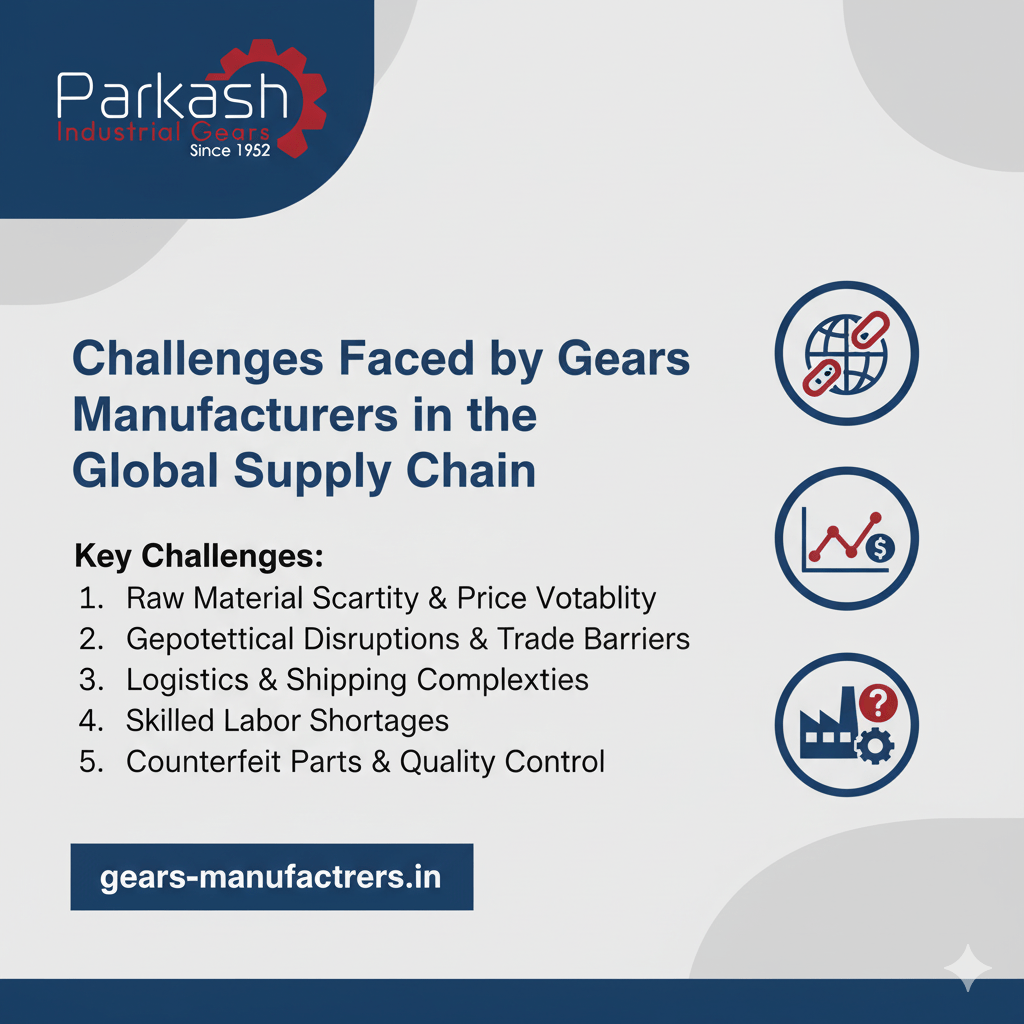
In today’s fast-paced industrial world, gears manufacturers play a pivotal role in keeping machinery, automotive systems, and heavy equipment operational. However, operating in a global supply chain environment brings a unique set of challenges that can impact production timelines, cost efficiency, and product quality. Parkash Industrial Gears, a leading name in the industry, has navigated these complexities effectively, delivering high-quality solutions as a trusted spur gear manufacturer and sprocket gear manufacturer.
Understanding the Complexities of the Global Supply Chain
The global supply chain, though offering vast opportunities for expansion and sourcing, is a double-edged sword. Gears manufacturers face a multi-layered network involving suppliers, logistics providers, and end-users spread across various countries. Coordination in such a system requires precise planning and risk mitigation strategies.
Some of the critical challenges include:
1. Raw Material Shortages
A primary hurdle for gears manufacturers today is the scarcity of high-grade raw materials, such as alloy steel, which are crucial for gear production. Global demand fluctuations, mining restrictions, and trade tariffs exacerbate the issue, making consistent supply a challenge. Manufacturers like Parkash Industrial Gears often rely on diversified suppliers and strategic inventory management to maintain production flow and ensure they deliver reliable products as a top spur gear manufacturer.
2. Logistics and Transportation Issues
Shipping delays, container shortages, and rising freight costs have significantly affected the timelines for gears manufacturers. Even minor delays in transportation can disrupt production schedules, especially when manufacturers operate on a just-in-time (JIT) inventory system. For a sprocket gear manufacturer, delays in component delivery can directly impact client machinery operations, affecting overall reliability and business reputation.
3. Geopolitical and Trade Factors
Geopolitical tensions, trade wars, and regional sanctions create uncertainty in sourcing raw materials and exporting finished products. Gears manufacturers must navigate import/export restrictions and fluctuating tariffs, which can increase costs and reduce competitiveness in the international market. Strategic partnerships and compliance with international standards are vital for companies like Parkash Industrial Gears to maintain a strong global presence.
Hook: Analyze the supply chain challenges, including raw material shortages, logistics issues, and geopolitical factors affecting gears manufacturers. Understanding these dynamics is crucial for staying ahead in the competitive manufacturing sector.
4. Quality Control and Standardization
Maintaining consistent quality across a global supply chain is a persistent challenge. Variations in supplier standards, transportation conditions, and local regulations can affect the final product. Gears manufacturers like Parkash Industrial Gears implement stringent quality control measures and adhere to international manufacturing standards to deliver durable and reliable gears. Their expertise as a spur gear manufacturer and sprocket gear manufacturer ensures that clients receive high-performance products every time.
5. Technological Adaptation
The integration of Industry 4.0 technologies, automation, and AI-driven inventory systems is reshaping the global supply chain. While these advancements offer efficiency, smaller gears manufacturers often struggle with the high investment costs and workforce training required to implement new systems. Companies that adapt quickly gain a competitive edge, enhancing precision, reducing waste, and improving delivery schedules.
Strategies Adopted by Successful Gears Manufacturers
Leading companies like Parkash Industrial Gears have adopted several strategies to navigate the complexities of the global supply chain effectively:
- Diversified Supplier Network: Reducing dependency on a single supplier for raw materials minimizes the risk of production halts.
- Advanced Inventory Management: Utilizing predictive analytics ensures timely procurement of materials and reduces overstocking.
- Robust Quality Assurance: Strict inspection processes guarantee uniformity in gear manufacturing, crucial for spur gear manufacturers and sprocket gear manufacturers.
- Technological Integration: Automation and digital tracking enhance supply chain visibility and operational efficiency.
- Flexible Production Planning: Ability to adjust production schedules based on global supply chain disruptions ensures timely delivery to clients.
The Role of Parkash Industrial Gears
As a trusted brand in the gear manufacturing industry, Parkash Industrial Gears has consistently demonstrated resilience in the face of global supply chain challenges. Their focus on innovation, quality, and client satisfaction positions them as a reliable spur gear manufacturer and sprocket gear manufacturer in India and beyond. By staying ahead of technological trends, maintaining a diversified supplier base, and implementing rigorous quality control, they exemplify how modern gears manufacturers can thrive despite global challenges.
Conclusion
Navigating the global supply chain is a complex task for gears manufacturers, with raw material shortages, logistics disruptions, and geopolitical factors posing significant challenges. However, companies like Parkash Industrial Gears show that strategic planning, technological adaptation, and a focus on quality can transform these challenges into opportunities. For businesses seeking reliable gear solutions, partnering with a competent spur gear manufacturer or sprocket gear manufacturer ensures operational efficiency and long-term success.
 Best Spur Gears Manufacturer in India